On this page9
TFI Co. supplies metal cutting bandsaw machines to workshops across the UAE and GCC, from a compact single-column saw for 227 mm round bar to a CNC rotatory machine with automatic feeding for sections up to 620 x 440 mm. This page compares the four models so you can match capacity, feed system and blade size to the work you actually cut.
The TFI bandsaw machine range
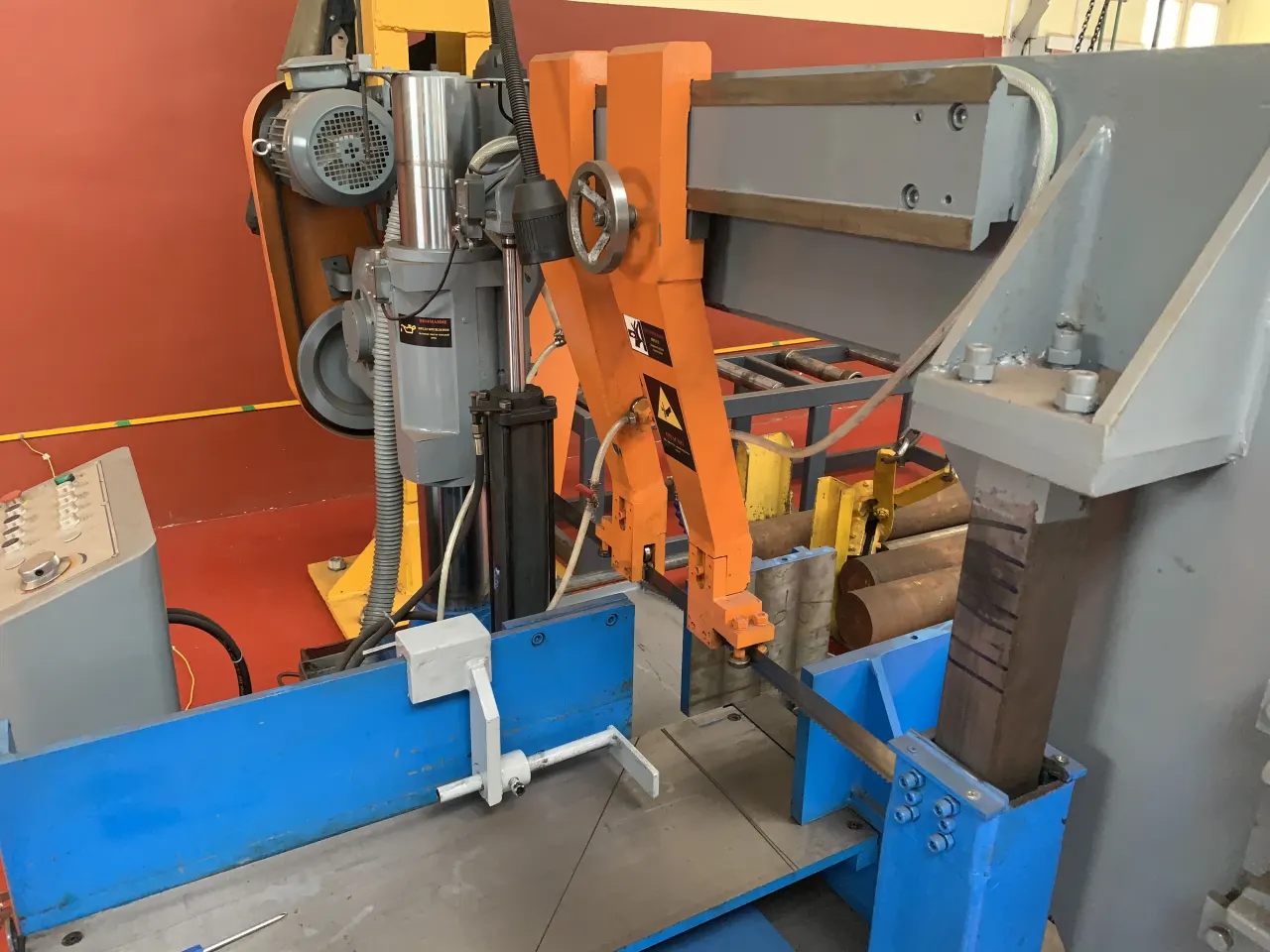
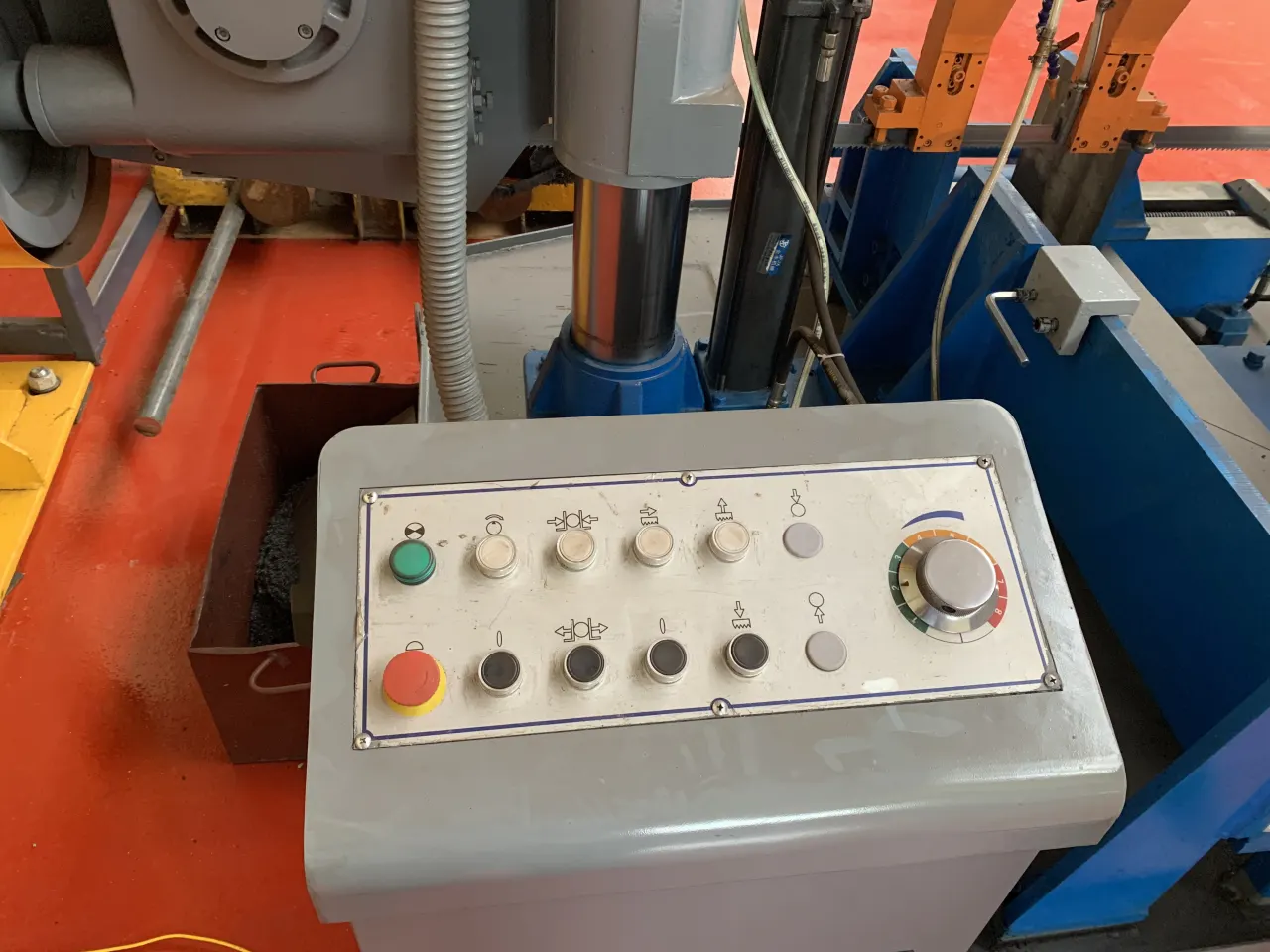
All four machines are horizontal metal cutting bandsaws: the bar lies in a vice and a continuous band blade, running round two wheels, is lowered through it. They differ in size, in how much of the cycle the machine does for the operator, and in whether the head swivels for mitre cuts.
Choose a model
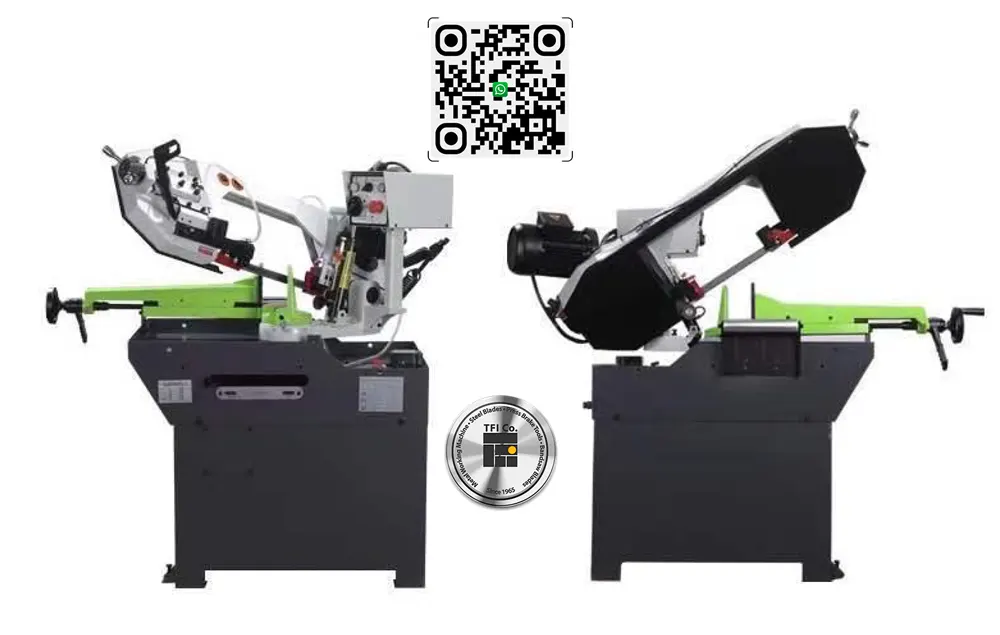
Single column, rotatory head. 227 mm round, 260 x 200 mm rectangular at 90°; mitres at 45° and 60°. Blade 27 x 0.9 x 2455 mm.
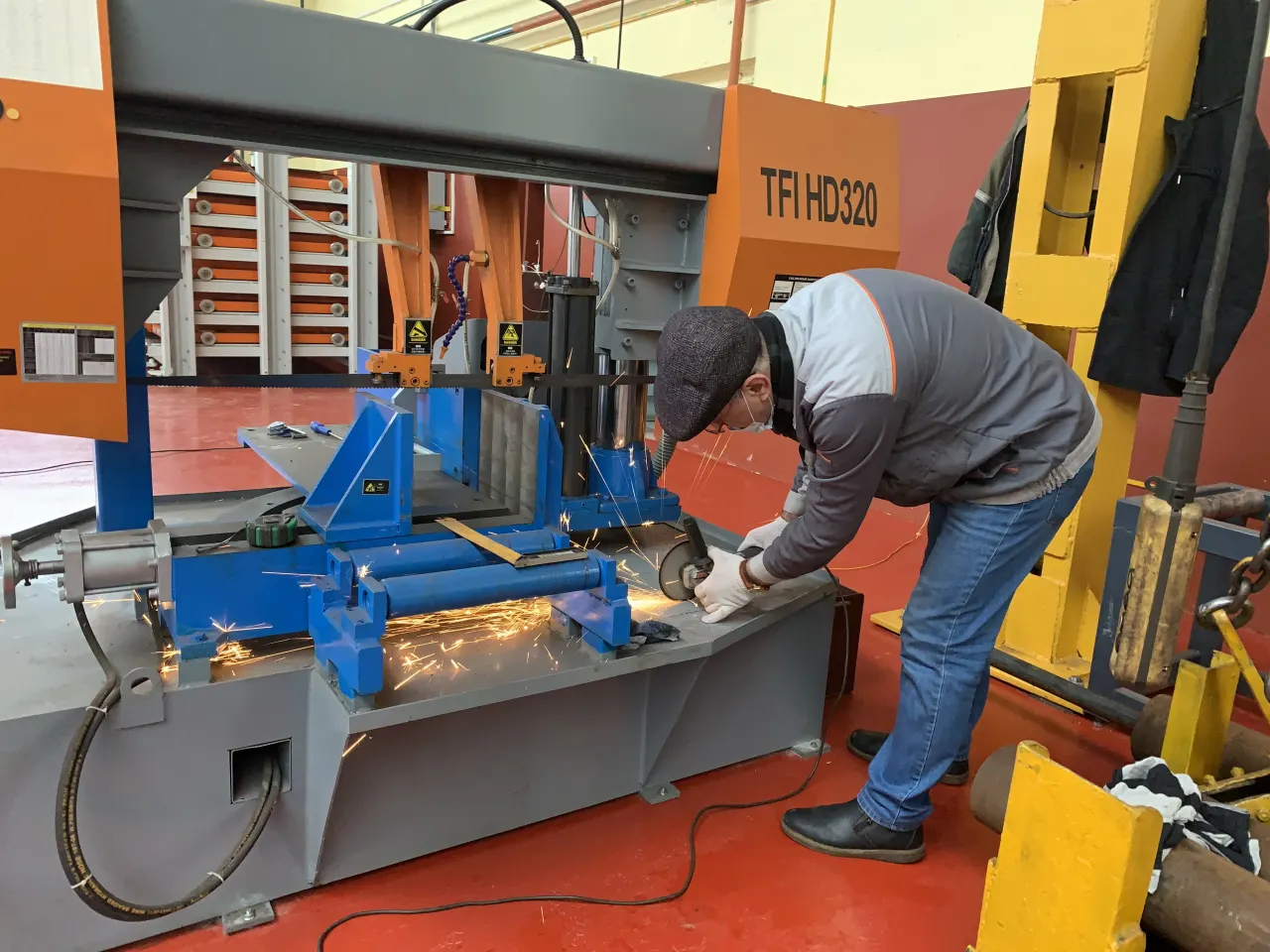
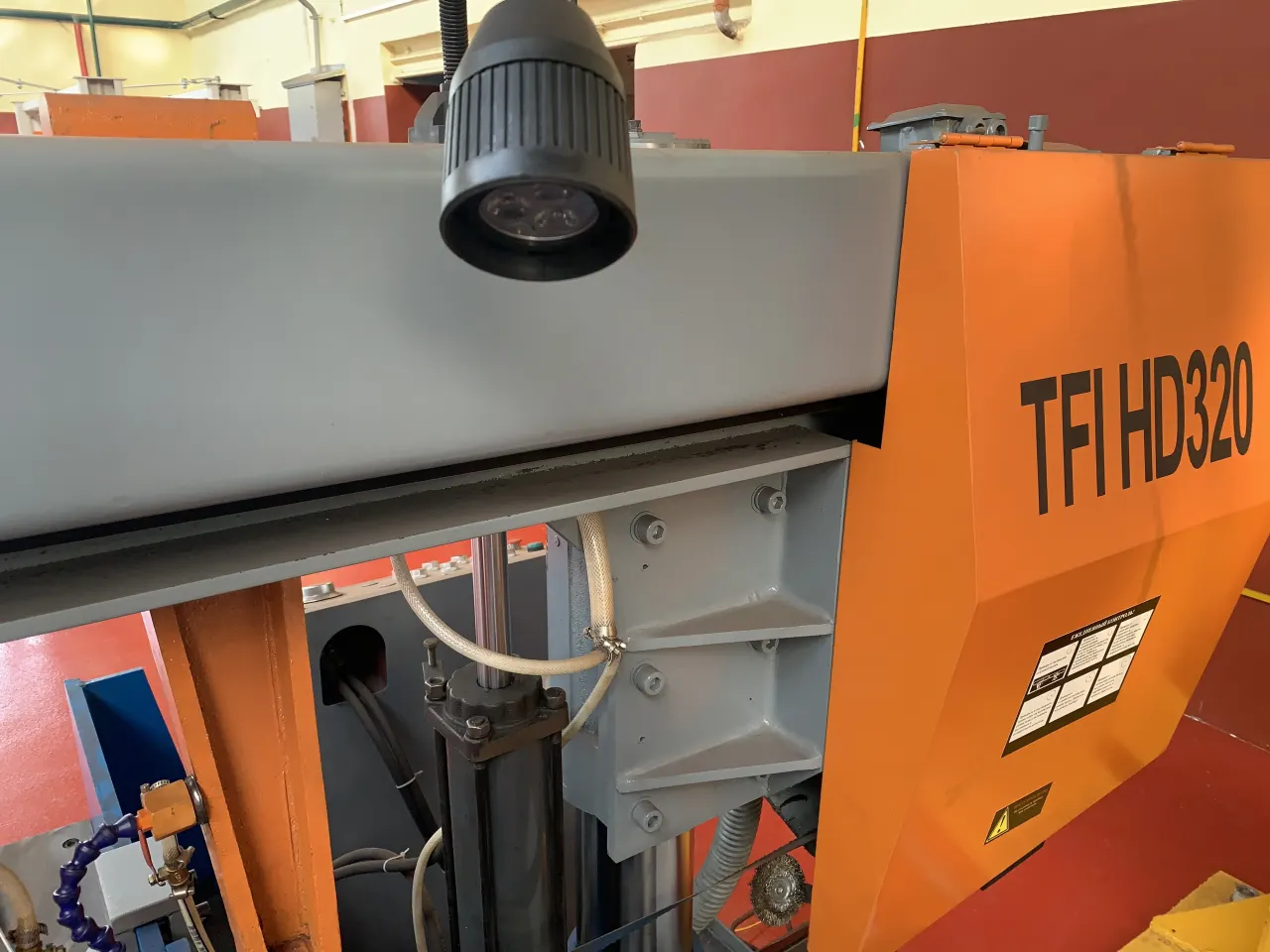
Single column, rotatory head, hydraulic vice and stepless feed. 320 mm round, 320 x 320 mm square at 90°. Blade 34 x 1.1 x 4470 mm.
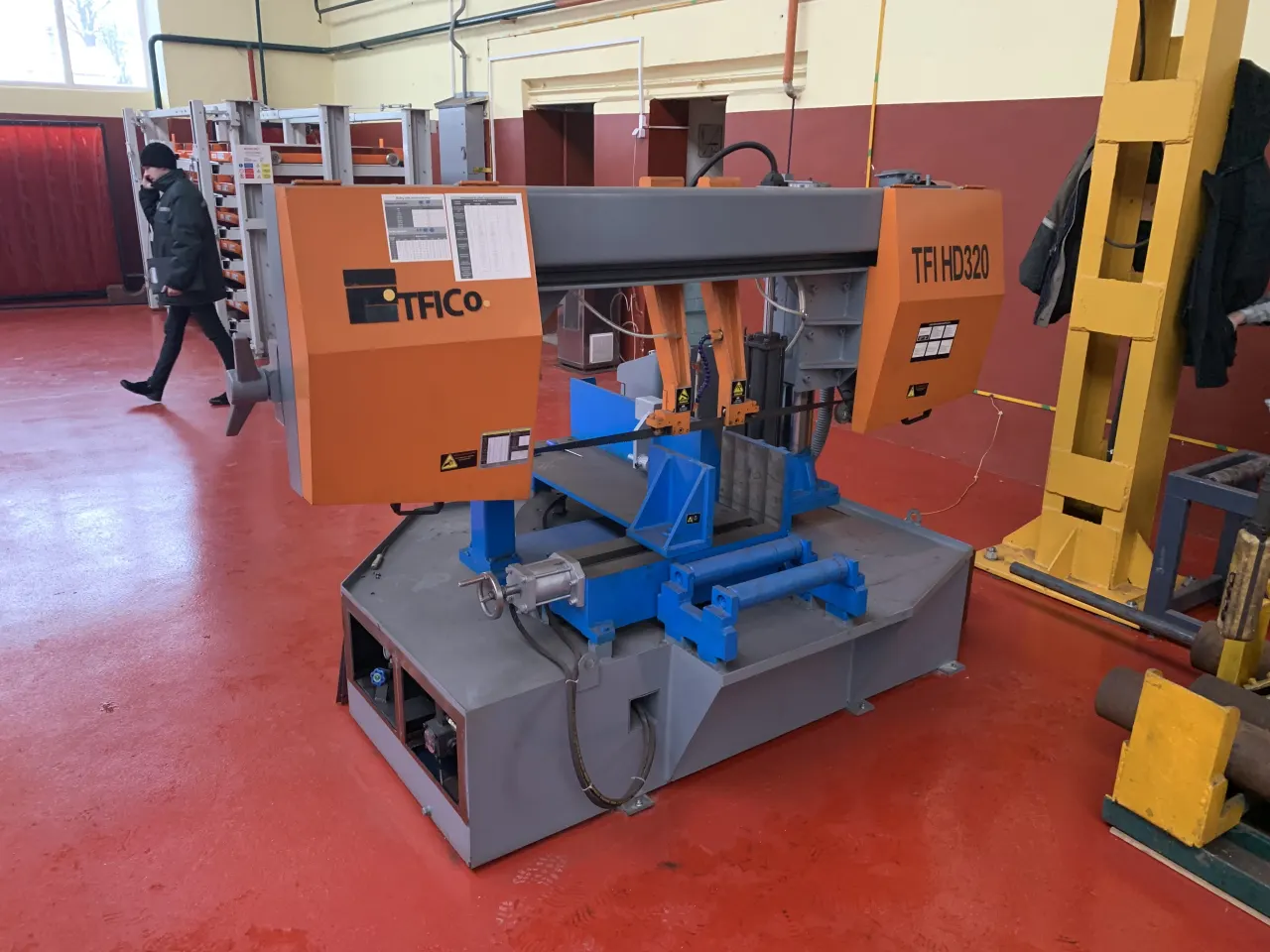
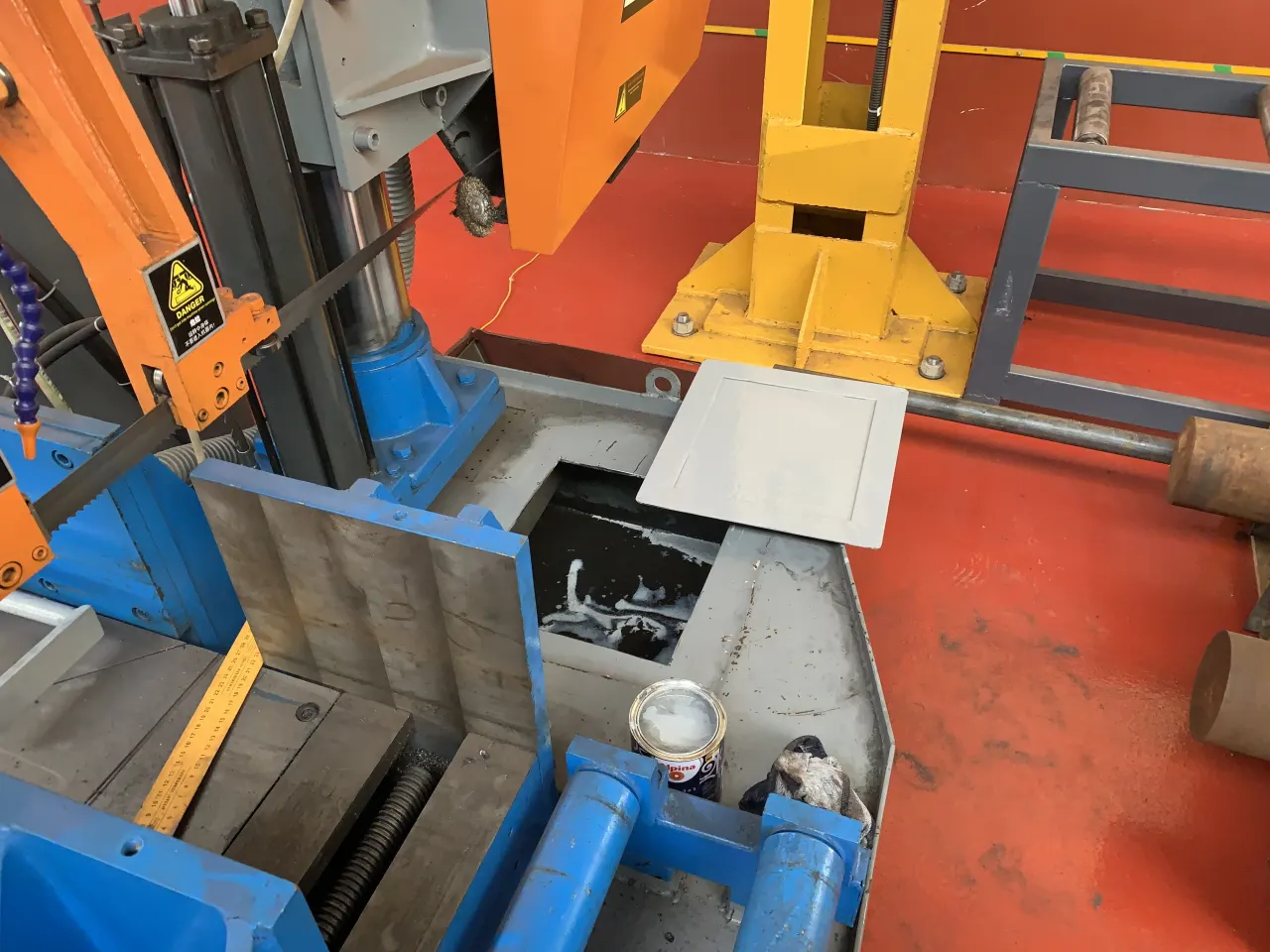
Semi-automatic, hydraulic clamp, wire brush blade cleaning. 380 mm round, 330 x 430 mm rectangular. Blade 34 x 1.1 x 4115 mm.
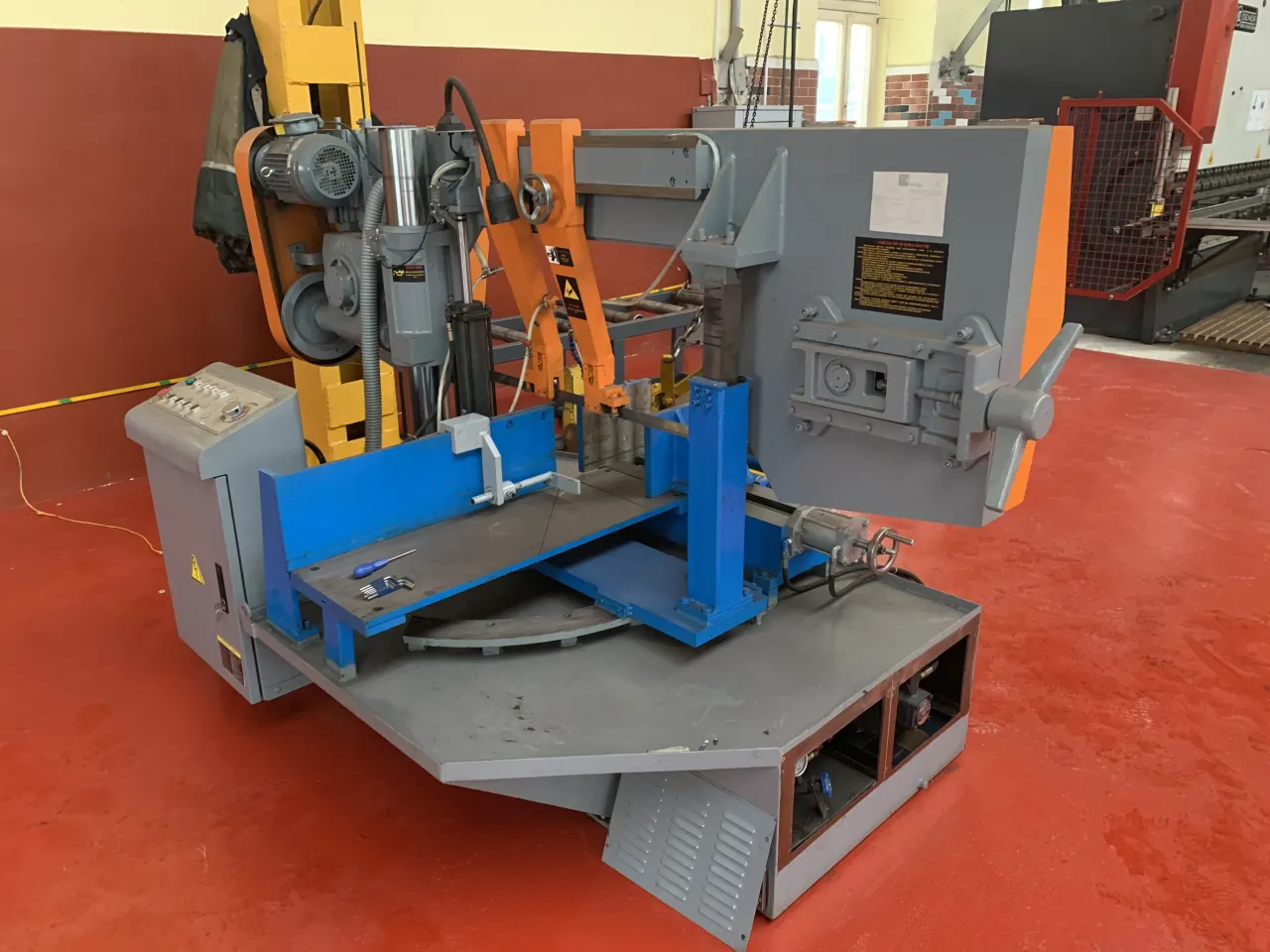
CNC rotatory with automatic material feeding and inverter speed. 440 mm round, 620 x 440 mm at 90°; head +60° to -60°. Blade 34 x 1.1 x 5200 mm.
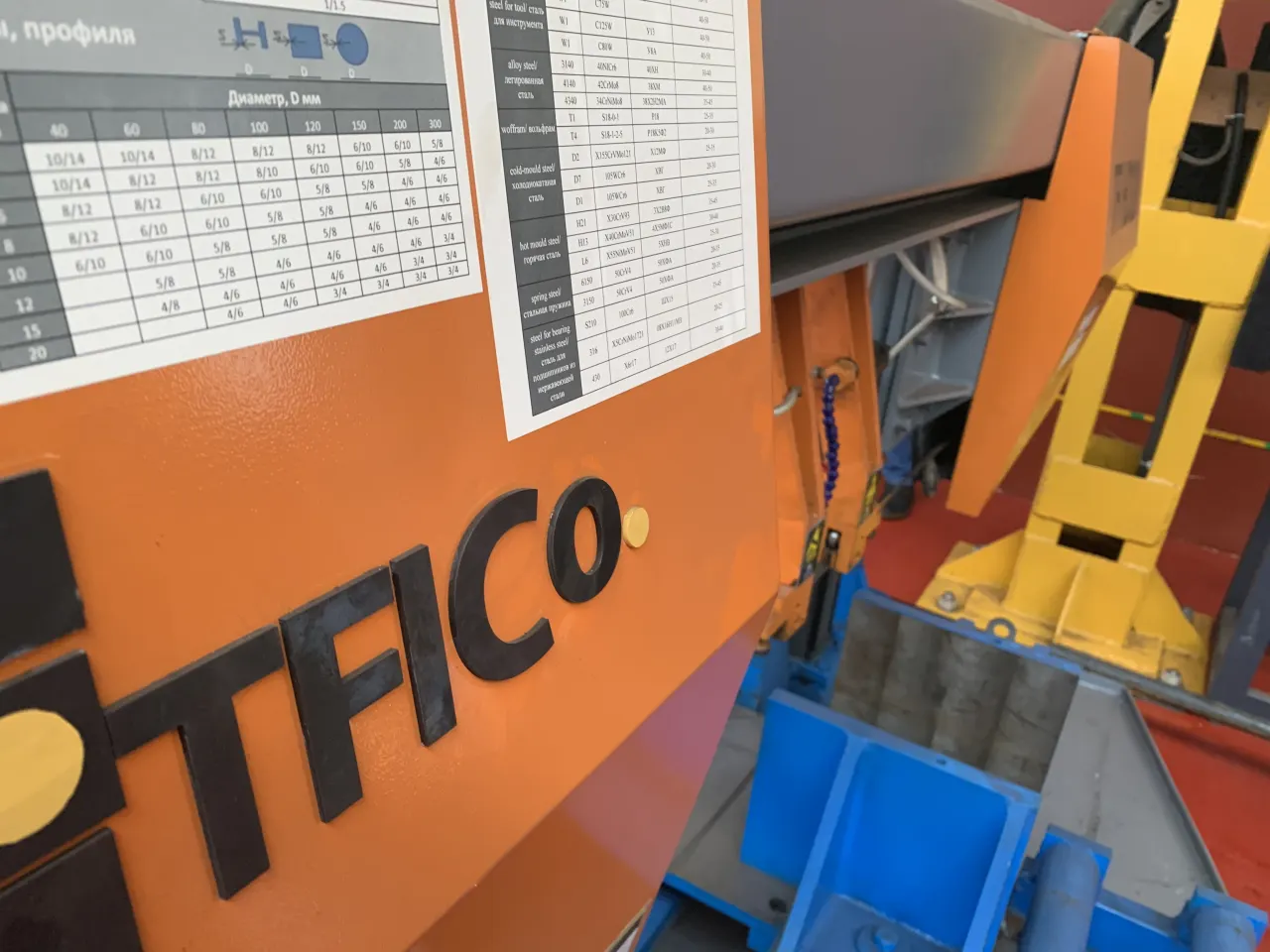
Side-by-side comparison
The table sets out the published figures for each model. Where a value is not listed for a machine, we give it with the quotation.
| Model | Round at 90° | Rectangular at 90° | Blade size (mm) | Blade speed | Material feed |
|---|---|---|---|---|---|
| TFI-R-260-S | 227 mm | 260 x 200 mm | 27 x 0.9 x 2455 | 36 / 72 m/min | Manual |
| TFI-R-320-S | 320 mm | 320 x 320 mm | 34 x 1.1 x 4470 | 22 / 40 / 60 m/min | Manual |
| TFI-380-SA | 380 mm | 330 x 430 mm | 34 x 1.1 x 4115 | 26 / 46 / 72 m/min | Manual |
| TFI-R-440 | 440 mm | 620 x 440 mm | 34 x 1.1 x 5200 | 20 to 90 m/min, inverter | Automatic |
TFI-R-260-S
- Round at 90°
- 227 mm
- Rectangular at 90°
- 260 x 200 mm
- Blade size (mm)
- 27 x 0.9 x 2455
- Blade speed
- 36 / 72 m/min
- Material feed
- Manual
TFI-R-320-S
- Round at 90°
- 320 mm
- Rectangular at 90°
- 320 x 320 mm
- Blade size (mm)
- 34 x 1.1 x 4470
- Blade speed
- 22 / 40 / 60 m/min
- Material feed
- Manual
TFI-380-SA
- Round at 90°
- 380 mm
- Rectangular at 90°
- 330 x 430 mm
- Blade size (mm)
- 34 x 1.1 x 4115
- Blade speed
- 26 / 46 / 72 m/min
- Material feed
- Manual
TFI-R-440
- Round at 90°
- 440 mm
- Rectangular at 90°
- 620 x 440 mm
- Blade size (mm)
- 34 x 1.1 x 5200
- Blade speed
- 20 to 90 m/min, inverter
- Material feed
- Automatic
| Model | Main motor | Net weight | Machine size (L x W x H) |
|---|---|---|---|
| TFI-R-260-S | 0.75/1.1 kW | On request | On request |
| TFI-R-320-S | 4 kW | 1450 kg | 2450 x 1550 x 1500 mm |
| TFI-380-SA | 3 kW | 900 kg | 2150 x 1100 x 1450 mm |
| TFI-R-440 | 3 kW | 1400 kg | 2900 x 1200 x 1450 mm |
TFI-R-260-S
- Main motor
- 0.75/1.1 kW
- Net weight
- On request
- Machine size (L x W x H)
- On request
TFI-R-320-S
- Main motor
- 4 kW
- Net weight
- 1450 kg
- Machine size (L x W x H)
- 2450 x 1550 x 1500 mm
TFI-380-SA
- Main motor
- 3 kW
- Net weight
- 900 kg
- Machine size (L x W x H)
- 2150 x 1100 x 1450 mm
TFI-R-440
- Main motor
- 3 kW
- Net weight
- 1400 kg
- Machine size (L x W x H)
- 2900 x 1200 x 1450 mm
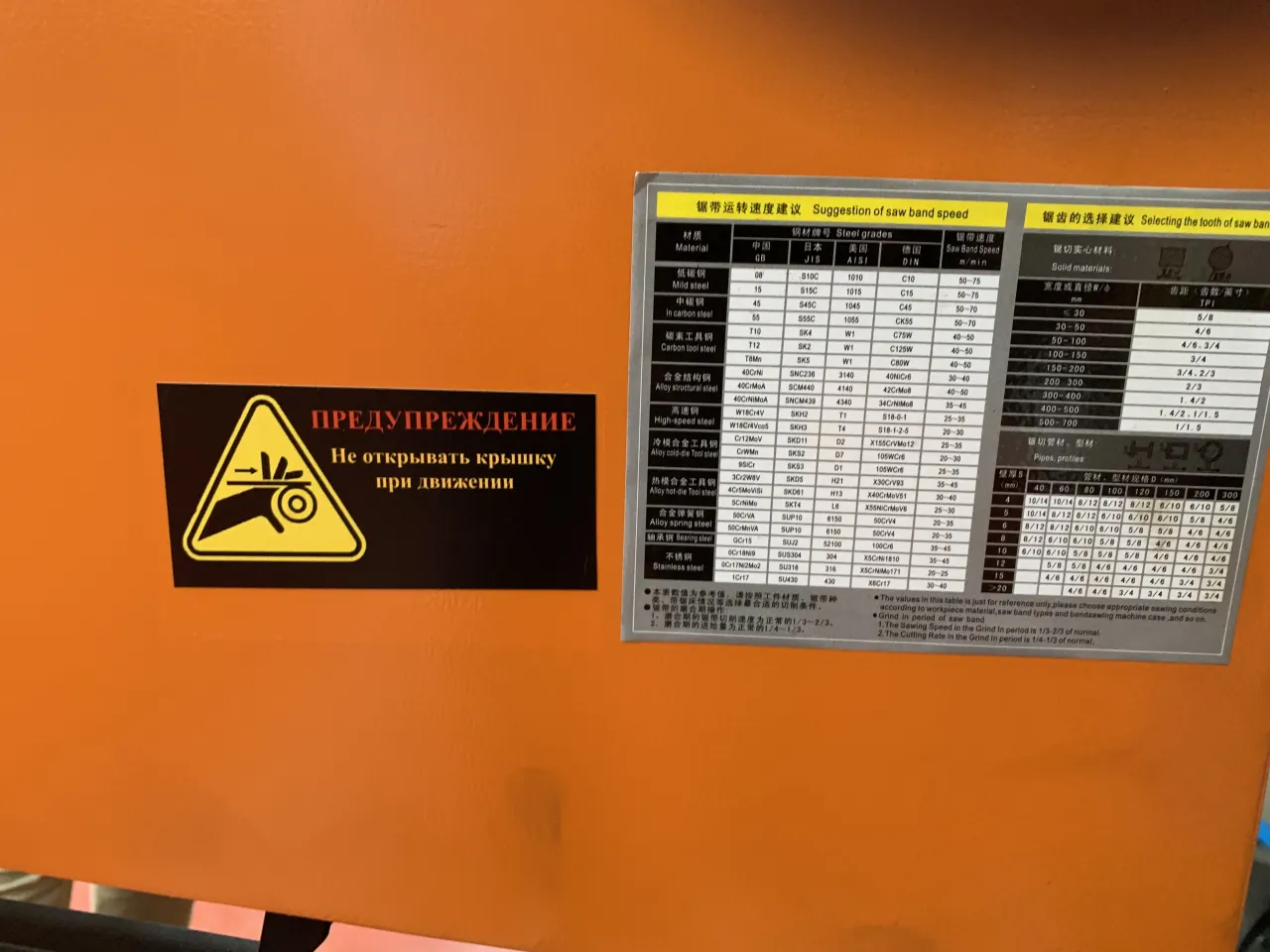
Single column, semi-automatic and CNC: what the terms mean
Machine names describe how the saw is built and how much of the cycle it runs on its own. Knowing the terms makes quotations easier to compare.
| Machine type | How it works | Best for | TFI models |
|---|---|---|---|
| Single column, rotatory head | The saw bow pivots down on one column; the whole head swivels so the bar stays straight in the vice for mitres | Fabrication with frequent 45° and 60° cuts | TFI-R-260-S, TFI-R-320-S |
| Semi-automatic | The machine clamps the work and controls the cutting stroke; the operator loads the bar and sets the length | Varied work where sizes change often | TFI-380-SA |
| CNC with automatic feeding | The machine also indexes the bar forward to length between cuts | Batches of repeat pieces with one operator | TFI-R-440 |
Single column, rotatory head
- How it works
- The saw bow pivots down on one column; the whole head swivels so the bar stays straight in the vice for mitres
- Best for
- Fabrication with frequent 45° and 60° cuts
- TFI models
- TFI-R-260-S, TFI-R-320-S
Semi-automatic
- How it works
- The machine clamps the work and controls the cutting stroke; the operator loads the bar and sets the length
- Best for
- Varied work where sizes change often
- TFI models
- TFI-380-SA
CNC with automatic feeding
- How it works
- The machine also indexes the bar forward to length between cuts
- Best for
- Batches of repeat pieces with one operator
- TFI models
- TFI-R-440
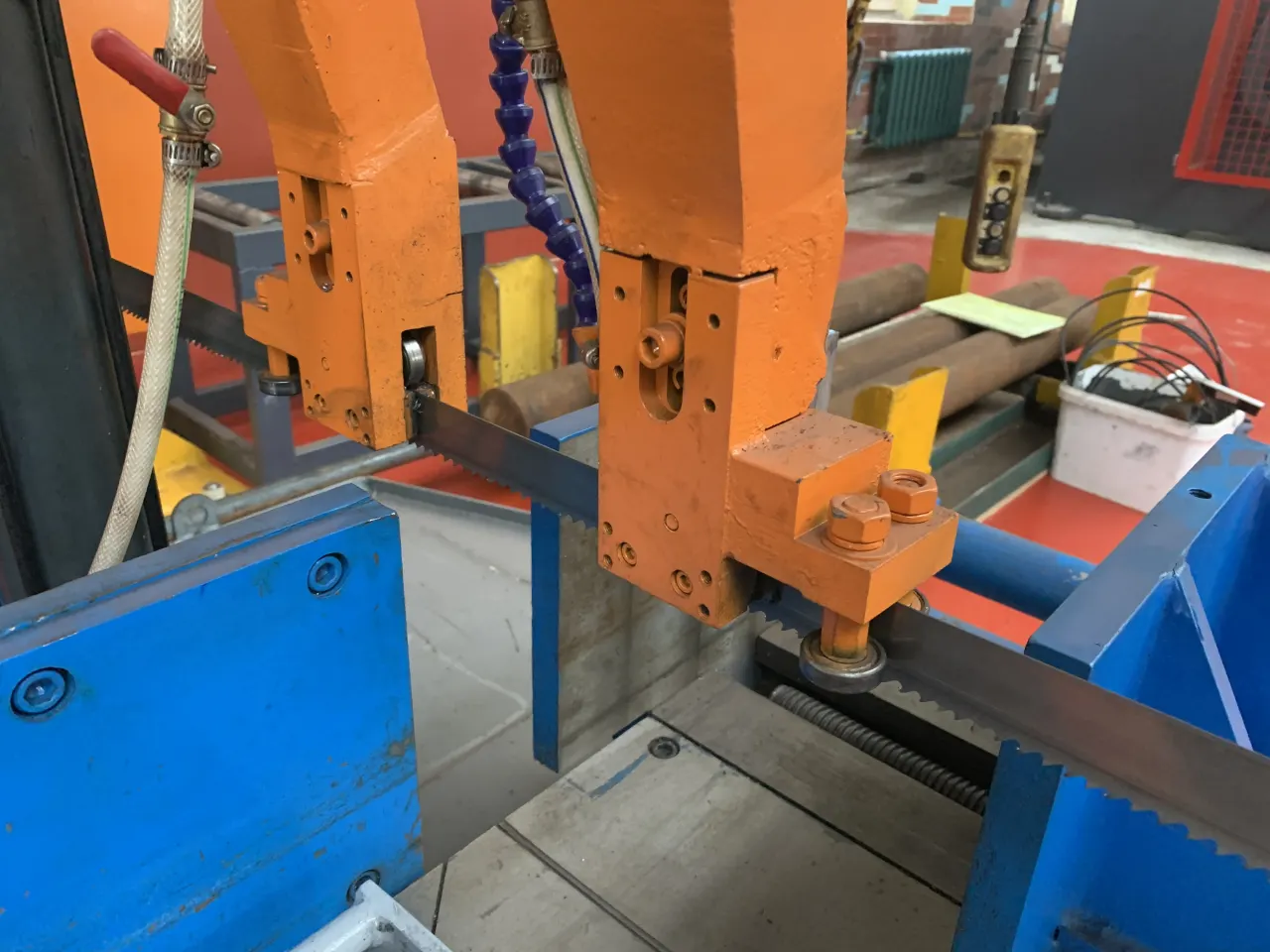
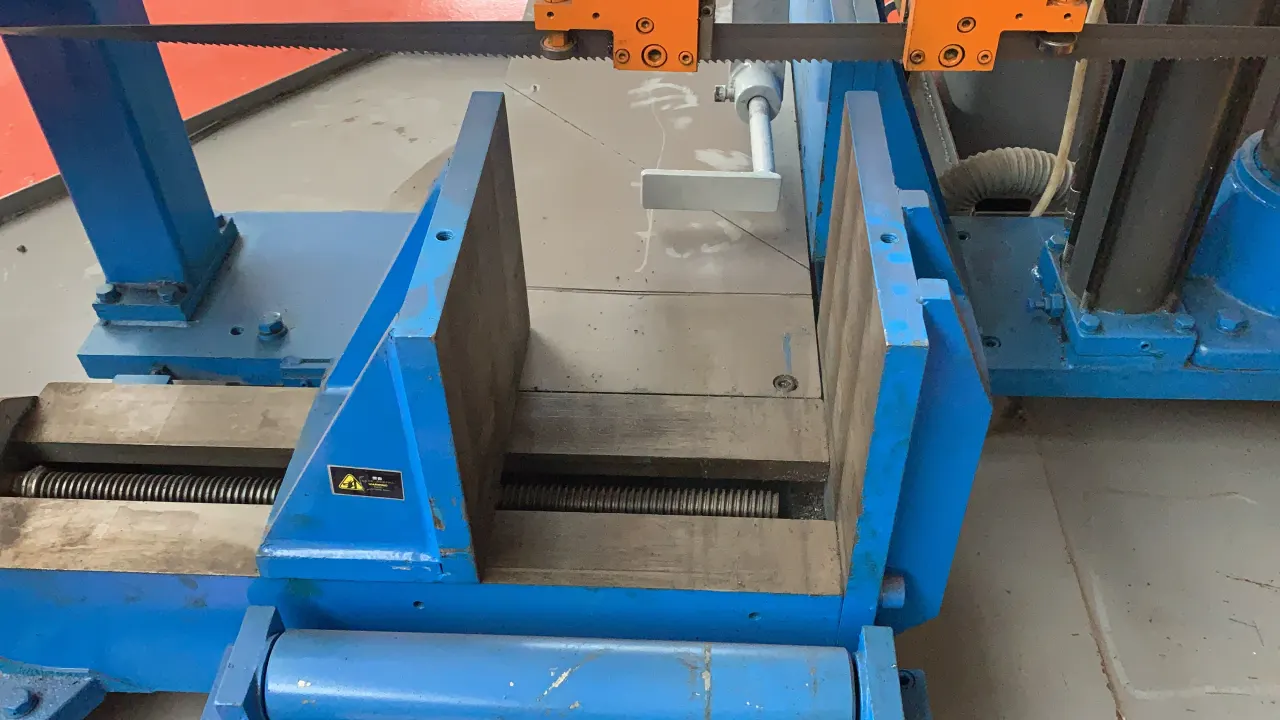
How to choose the right machine
Start with your largest section.
Pick a machine whose 90° capacity covers your biggest regular bar or beam with some margin, not the one-off job you see twice a year.
Check mitre needs.
If you cut angles on large sections, compare capacities at 45° and 60°, which are always smaller than at 90°.
Look at batch size.
Varied one-off cuts suit manual feed. Repeat lengths in tens or hundreds justify automatic feeding.
Consider the materials.
Stainless and alloy steels need low blade speeds; a machine with a low speed step or inverter control handles them better.
Measure the space.
Add room for full-length bars on the infeed side and for cut pieces on the outfeed side to the machine footprint.
Check the power supply.
All the machines are three-phase; confirm your voltage and frequency with us.
Blades for TFI bandsaw machines
Each machine runs a specific band size, listed in the comparison above, and we weld bi-metal blades to the exact length for each model. For steel, stainless and alloy bar the usual choice is an M42 bi-metal blade with cobalt high-speed steel teeth on a flexible alloy back; see the M42 bi-metal bandsaw blade catalogue.
| Work | Typical pitch | Why |
|---|---|---|
| Thin-walled tube, light profiles | 10/14 or 8/12 TPI | Keeps at least three teeth in a thin wall |
| General mixed work | 6/10 or 5/8 TPI | One blade covers most sections |
| Large solid bar | 3/4 or 2/3 TPI | Deep gullets carry the chip across a long cut |
Thin-walled tube, light profiles
- Typical pitch
- 10/14 or 8/12 TPI
- Why
- Keeps at least three teeth in a thin wall
General mixed work
- Typical pitch
- 6/10 or 5/8 TPI
- Why
- One blade covers most sections
Large solid bar
- Typical pitch
- 3/4 or 2/3 TPI
- Why
- Deep gullets carry the chip across a long cut
Machine owners can put blades on a scheduled supply: agree the sizes and pitches once, then receive them monthly or quarterly on a call-off plan. We appreciate scheduled orders, and bulk orders of loops or coil are offered at good prices.
Installation, break-in and care
Every bandsaw cuts straighter and wears blades more slowly when it is installed and maintained well. These general rules apply to the whole range:
Install on level, solid concrete and level the bed; support long bars on roller stands at table height.
Have a qualified electrician connect the three-phase supply and confirm the direction of rotation.
Mix soluble coolant at the supplier's concentration; replace it when it smells or separates.
Break in every new blade at about half normal feed for the first cuts, then increase gradually.
Clear swarf every shift, keep the chip brush on the teeth, and check guides and tension weekly.
Release blade tension when the machine stands idle overnight, which also helps in hot UAE workshops.
We favour planned maintenance of blades: replace them on a schedule set by cutting hours, number of cuts or regular wear checks, rather than waiting for a breakage that stops production. We help machine owners set up that plan.
Frequently asked questions
Which TFI bandsaw machine has the largest capacity?
The TFI-R-440. It cuts round bar up to 440 mm and rectangular sections up to 620 x 440 mm at 90°, with automatic material feeding.
Which machines can cut mitres?
The rotatory models: the TFI-R-260-S and TFI-R-320-S, and the TFI-R-440, whose head turns from +60° to -60°. For mitre work on the TFI-380-SA, ask us to confirm the angles available.
Do you supply blades for these machines?
Yes. We weld bi-metal blades to the exact length for each model, in the tooth pitch your work needs, and can quote spare blades with the machine.
What is the difference between semi-automatic and automatic?
A semi-automatic saw clamps and cuts under control, while the operator positions the bar for each cut. An automatic machine also feeds the bar to length between cuts, so batches run with little operator input.
Which machine should a small fabrication workshop choose?
For angle, channel, tube and bar up to about 200 mm with frequent mitres, the TFI-R-260-S is usually enough. If solid bar to 320 mm or hydraulic clamping is needed, the TFI-R-320-S is the next step.
What should I include in a quotation request?
The materials and largest sections you cut, the angles you need, typical batch sizes, your site voltage and frequency, and the delivery emirate.
Order a TFI bandsaw machine online
Request a quote for any machine in the TFI range through the order form. Include the model, the materials and largest sections you cut, the mitre angles, typical batch sizes, your site voltage and frequency, the delivery emirate, and any spare blades (size, TPI and quantity). Machine buyers can also set up a scheduled blade supply with us.
- Updated
- October 7, 2026
- Reading time
- 7 min read
Order or plan your blade supply
We appreciate scheduled orders, favour planned blade maintenance and offer good prices for bulk orders. Tell us what you need and our team replies by email.
Send an enquiry