On this page11
- What the M42 bi-metal range is
- The four models at a glance
- Open a model for full sizes and part numbers
- BAM: zero-rake blade for general steel
- Yazd: positive rake for structurals and stainless
- Qom: engineered relief angle for difficult alloys
- Kish: dedicated teeth for tube and profile cutting
- Choosing a model by the job in front of you
- Reading blade problems before they cost you
- Questions buyers ask about the M42 range
- Order M42 bi-metal bandsaw blades online
TFI Co. supplies four M42 bi-metal bandsaw blade models to workshops, steel stockholders and fabricators across the UAE and the wider GCC. Each one shares the same high-speed steel cutting edge but uses a different tooth geometry, so the right choice depends on what you cut, not on price or habit. This page sets the four side by side and links to the full specification of each.
What the M42 bi-metal range is
A bi-metal band joins two materials along one edge. The tooth tips are M42 high-speed steel, a grade alloyed with roughly 8% cobalt that keeps its hardness at cutting temperatures. Behind them sits a tough, flexible alloy-steel backing that flexes around the saw wheels thousands of times an hour without cracking.
The result holds an edge far longer than a carbon-steel band and still survives the fatigue of continuous production work.
| Cutting edge | M42 cobalt high-speed steel, welded to an alloy-steel backing |
|---|---|
| Tooth hardness | Rc 67-69 across the range |
| Widths | 19, 27, 34, 41 and 54 mm (54 mm in Qom only) |
| Gauges | 0.9 to 1.6 mm |
| Supply form | Mostly 250 ft coils, welded to your machine length |
| Typical work | Beams, channel, angle, tube and flat-bar bundles, solid rods and large square bar, stainless and nickel alloys |
- Cutting edge
- M42 cobalt high-speed steel, welded to an alloy-steel backing
- Tooth hardness
- Rc 67-69 across the range
- Widths
- 19, 27, 34, 41 and 54 mm (54 mm in Qom only)
- Gauges
- 0.9 to 1.6 mm
- Supply form
- Mostly 250 ft coils, welded to your machine length
- Typical work
- Beams, channel, angle, tube and flat-bar bundles, solid rods and large square bar, stainless and nickel alloys
Coils suit shops that weld their own loops. We appreciate scheduled orders, so a regular call-off of coils or welded loops can be booked once and delivered on plan, and bulk quantities across the range are priced favourably.
The four models at a glance
| Model | Tooth design | Widths x gauge (mm) | Pitches offered | Typical work |
|---|---|---|---|---|
| BAM | Straight teeth, 0° rake | 19 x 0.9, 27 x 0.9, 34 x 1.1, 41 x 1.27 | 3/4 to 10/14 variable, 10 raker, 14 wavy | General metals, mild steel, beams, channel, thin-wall bundles |
| Yazd | Strengthened teeth, positive rake | 19 x 0.9, 27 x 0.9, 34 x 1.1, 41 x 1.27 | 2/3 to 5/7 variable, 2 hook, 6 and 8 raker | Structurals, thick-wall tube, solids, stainless steel |
| Qom | Engineered relief angle, high positive rake, variable height and set | 19 x 0.9 up to 54 x 1.6 | 2/3, 3/4, 4/6 variable | Super alloys, titanium, stainless, tool steel, copper alloys |
| Kish | Dedicated tube-cutting teeth with protected tooth back | 27 x 0.9, 34 x 1.1, 41 x 1.27 | 4/6 variable | Tubes, structural steel, roll-formed and bent profiles |
BAM
- Tooth design
- Straight teeth, 0° rake
- Widths x gauge (mm)
- 19 x 0.9, 27 x 0.9, 34 x 1.1, 41 x 1.27
- Pitches offered
- 3/4 to 10/14 variable, 10 raker, 14 wavy
- Typical work
- General metals, mild steel, beams, channel, thin-wall bundles
Yazd
- Tooth design
- Strengthened teeth, positive rake
- Widths x gauge (mm)
- 19 x 0.9, 27 x 0.9, 34 x 1.1, 41 x 1.27
- Pitches offered
- 2/3 to 5/7 variable, 2 hook, 6 and 8 raker
- Typical work
- Structurals, thick-wall tube, solids, stainless steel
Qom
- Tooth design
- Engineered relief angle, high positive rake, variable height and set
- Widths x gauge (mm)
- 19 x 0.9 up to 54 x 1.6
- Pitches offered
- 2/3, 3/4, 4/6 variable
- Typical work
- Super alloys, titanium, stainless, tool steel, copper alloys
Kish
- Tooth design
- Dedicated tube-cutting teeth with protected tooth back
- Widths x gauge (mm)
- 27 x 0.9, 34 x 1.1, 41 x 1.27
- Pitches offered
- 4/6 variable
- Typical work
- Tubes, structural steel, roll-formed and bent profiles
Open a model for full sizes and part numbers
All-purpose band for mild steel and general metal cutting
Structural sections, thick-wall tube and work-hardening stainless
Production sawing of super alloys and exotic materials
Kish, dedicated tube-cutting teeth
Tubes, profiles and vibration-prone structural work
All-purpose band for mild steel and general metal cutting
Structural sections, thick-wall tube and work-hardening stainless
Production sawing of super alloys and exotic materials
Kish, dedicated tube-cutting teeth
Tubes, profiles and vibration-prone structural work
BAM: zero-rake blade for general steel
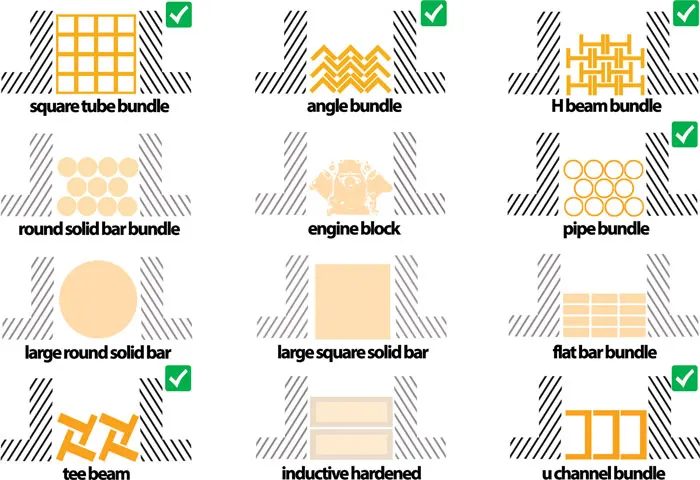
BAM is the everyday workhorse of the range. Its straight teeth have a 0° rake face, giving a smooth, stable cut that tolerates the mixed work of a busy shop: mild steel, beams, channel, angle and thin-wall bundles.
It has the widest pitch choice in the catalogue, from a coarse 3/4 TPI for larger sections to 10/14 TPI and a 14 TPI wavy set for thin walls. See the BAM blade sizes and part numbers.
Yazd: positive rake for structurals and stainless
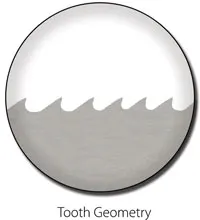
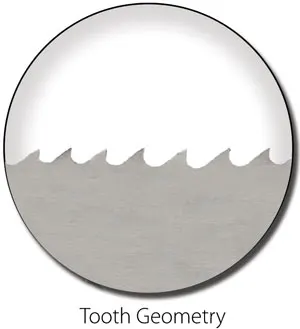
Yazd uses a special tooth geometry with increased tooth strength and a positive rake. A positive rake bites into the material more readily, which lowers cutting force and vibration and suits work-hardening grades such as stainless steel. It is built for solids and thick-wall tubing in medium alloy steels, structural sections, small solids and bundles, in both production and occasional cutting.
See the Yazd blade for structural steel and stainless.

Qom: engineered relief angle for difficult alloys
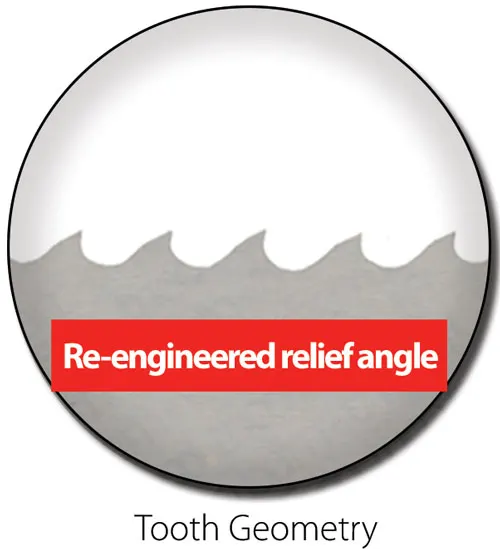
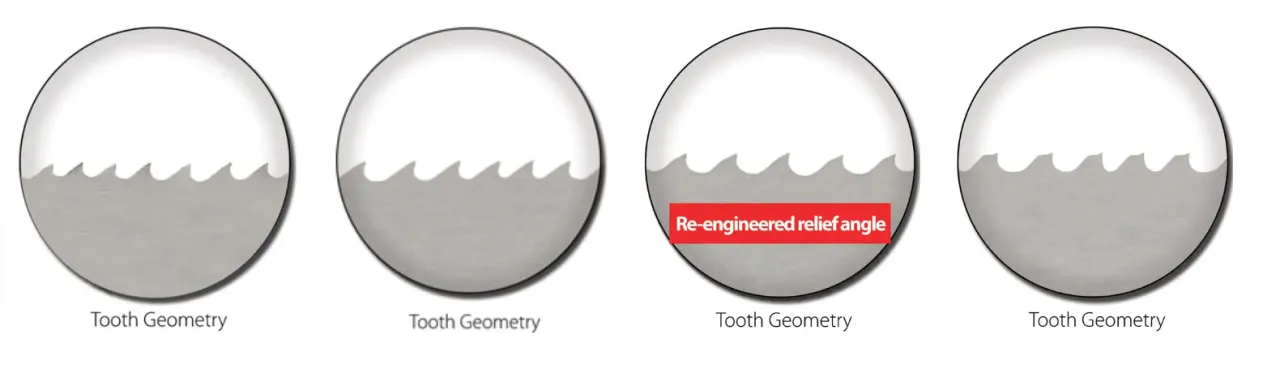
Qom is the specialist. Its teeth combine a re-engineered relief angle, a high positive rake and a variable tooth height and set, producing a pulsating action that keeps them biting into tough, heat-resistant metals.
It is meant for production sawing of Monel, Inconel, Hastelloy, titanium, stainless, tool steel, high-speed steel, hardened copper and aluminium bronze on saws with hydraulic feed control. It is the only model offered in 54 x 1.6 mm. See the Qom blade for super alloys and stainless steel.
Kish: dedicated teeth for tube and profile cutting

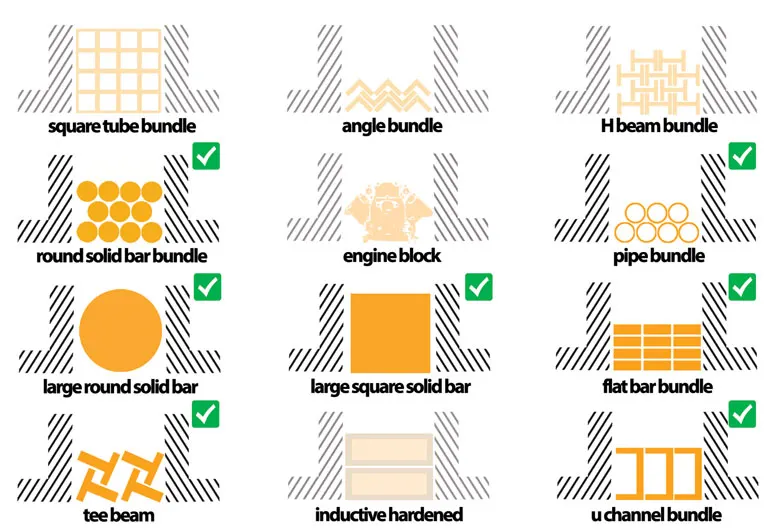
Tube and profile cutting is hard on teeth: each tooth strikes a thin wall, leaves it and strikes again, while the work vibrates.
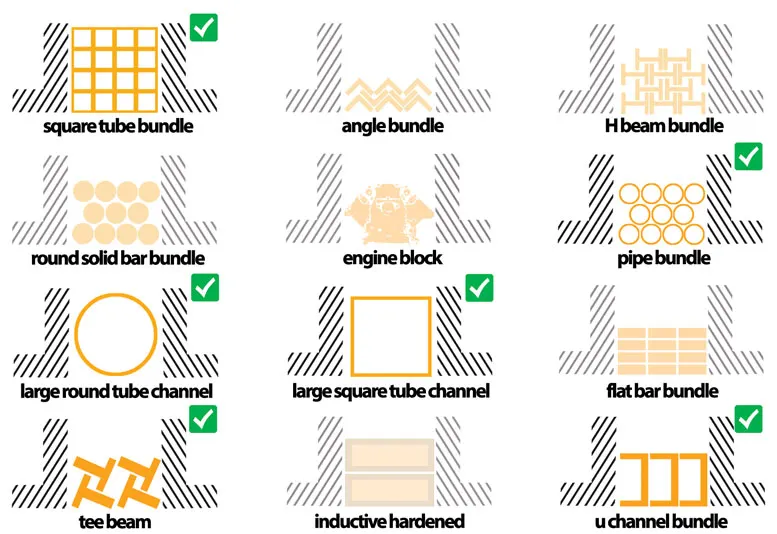
Kish answers that with a feature on the back face of the tooth tip that suppresses over-cutting and continuous chipping. The blade resists breakage and stripping yet still allows heavy penetration at fast rates on tubes, roll-formed and bent profiles, structural steel and small bundles. See the Kish blade for tube cutting.
Choosing a model by the job in front of you
| What you cut most | Model | Why |
|---|---|---|
| Mild steel beams, channel, angle, mixed general work | BAM | Forgiving 0° rake and the widest pitch choice; the usual one-blade shop default |
| Medium alloy solids, thick-wall tube, structurals, stainless | Yazd | Positive rake cuts instead of rubbing, which limits work hardening |
| Nickel alloys, titanium, tool steel, copper alloys in production | Qom | Relief angle and variable set for tough, heat-resistant metals; needs hydraulic feed |
| Tubes, profiles and vibrating thin-section bundles | Kish | Protected tooth back resists stripping on interrupted cuts |
Mild steel beams, channel, angle, mixed general work
- Model
- BAM
- Why
- Forgiving 0° rake and the widest pitch choice; the usual one-blade shop default
Medium alloy solids, thick-wall tube, structurals, stainless
- Model
- Yazd
- Why
- Positive rake cuts instead of rubbing, which limits work hardening
Nickel alloys, titanium, tool steel, copper alloys in production
- Model
- Qom
- Why
- Relief angle and variable set for tough, heat-resistant metals; needs hydraulic feed
Tubes, profiles and vibrating thin-section bundles
- Model
- Kish
- Why
- Protected tooth back resists stripping on interrupted cuts
Pitch and width matter as much as model:
- Teeth in the cut: keep at least three teeth on the thinnest wall, and avoid so many on large solids that the gullets pack with chips.
- Variable pitch: 4/6 or 5/8 spreads tooth spacing, breaks up vibration and covers more section sizes with one blade.
- Width: use the widest band and gauge your saw accepts for straight cuts. A wider, thicker band resists deflection and takes a higher feed.
Reading blade problems before they cost you
Most early blade failures trace back to settings, not steel. The same symptoms appear on every model, so check these causes before changing blade type.
| Symptom | Common causes | First fix |
|---|---|---|
| Stripped teeth | Skipped break-in, feed too high, pitch too coarse, work moving in the vice, band speed too slow | Break in properly, finer pitch, clamp firmly, check speed chart |
| Rapid dulling | Speed or feed too high, poor coolant mix, heavy scale, work-hardened surface, blade fitted backwards | Correct coolant ratio, reduce speed, check tooth direction |
| Crooked cut | Overfeeding, low tension, guides set too far apart, worn teeth | Reduce feed, tension to spec, close the guides |
| Blue or packed chips | Overloaded teeth, too many teeth for the section | Coarser pitch, lower feed |
Stripped teeth
- Common causes
- Skipped break-in, feed too high, pitch too coarse, work moving in the vice, band speed too slow
- First fix
- Break in properly, finer pitch, clamp firmly, check speed chart
Rapid dulling
- Common causes
- Speed or feed too high, poor coolant mix, heavy scale, work-hardened surface, blade fitted backwards
- First fix
- Correct coolant ratio, reduce speed, check tooth direction
Crooked cut
- Common causes
- Overfeeding, low tension, guides set too far apart, worn teeth
- First fix
- Reduce feed, tension to spec, close the guides
Blue or packed chips
- Common causes
- Overloaded teeth, too many teeth for the section
- First fix
- Coarser pitch, lower feed
We favour planned maintenance of blades: replacing bands on a schedule of cutting hours or wear checks rather than waiting for a breakage mid-shift. Ask us and we will help you set that plan up for your machines.
Questions buyers ask about the M42 range
What does M42 mean on a bandsaw blade?
M42 is a cobalt high-speed steel grade used for the tooth tips. It keeps its hardness at cutting temperatures better than standard HSS, which is why it is the common choice for bi-metal bands cutting steel. On TFI Co. blades the teeth are hardened to Rc 67-69.
Can one blade model cover the whole workshop?
For many fabrication shops cutting mostly mild steel sections, BAM in a variable pitch covers most jobs. Shops cutting a lot of stainless, thick-wall tube or nickel alloys get noticeably better blade life by moving those jobs to Yazd or Qom.
Which widths are available?
BAM and Yazd come in 19, 27, 34 and 41 mm. Kish comes in 27, 34 and 41 mm. Qom adds a 54 x 1.6 mm strip for larger machines. Always use the width and gauge your saw manufacturer specifies.
Do you supply coolant and machines as well as blades?
Yes. TFI Co. also supplies coolant liquid for bandsaw machines, bandsaw machines for metalworking, and food bandsaw blades.
Do you sell in bulk to factories and dealers?
Yes. We supply factories running several bandsaw machines and dealers in the Middle East, North Africa and South Asia. Bulk orders get good prices; tell us your expected quantities in the order form.
Order M42 bi-metal bandsaw blades online
Tell us the model (BAM, Yazd, Qom or Kish), blade width x thickness, welded length or coil metres, TPI, material cut, quantity and delivery emirate. Regular users can set up a scheduled order instead of reordering each time. TFI Co. has supplied the UAE and GCC since 1965.
- Section
- TFI Co. Catalogue: Bandsaw Blades, Hacksaw Blades and Machines
- Updated
- October 7, 2026
- Reading time
- 7 min read
Order or plan your blade supply
We appreciate scheduled orders, favour planned blade maintenance and offer good prices for bulk orders. Tell us what you need and our team replies by email.
Send an enquiry