
On this page9
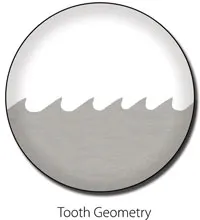
Yazd is the TFI Co. M42 bi-metal blade for jobs where a neutral tooth starts to struggle: structural sections, thick-wall tube, medium alloy solids and stainless steel. Its special tooth geometry pairs a positive rake with extra tooth strength, so the teeth bite in cleanly, run with less vibration and stand up to production cutting in UAE steel yards and machine shops.

Yazd blade overview
| Construction | Bi-metal, M42 high-speed steel cutting edge |
|---|---|
| Tooth hardness | Rc 67-69 |
| Tooth form | Special geometry with increased tooth strength and positive rake |
| Widths x gauge | 19 x 0.9, 27 x 0.9, 34 x 1.1, 41 x 1.27 mm |
| Pitches | Variable 2/3, 3/4, 4/6, 5/7 TPI; constant 2 TPI hook, 6 TPI raker, 8 TPI raker |
| Coil length | 250 ft for 19, 27 and 34 mm; 150 ft listed for 41 mm |
| Best suited to | Structurals, thick-wall tube, medium alloy solids, bundles, stainless steel |
- Construction
- Bi-metal, M42 high-speed steel cutting edge
- Tooth hardness
- Rc 67-69
- Tooth form
- Special geometry with increased tooth strength and positive rake
- Widths x gauge
- 19 x 0.9, 27 x 0.9, 34 x 1.1, 41 x 1.27 mm
- Pitches
- Variable 2/3, 3/4, 4/6, 5/7 TPI; constant 2 TPI hook, 6 TPI raker, 8 TPI raker
- Coil length
- 250 ft for 19, 27 and 34 mm; 150 ft listed for 41 mm
- Best suited to
- Structurals, thick-wall tube, medium alloy solids, bundles, stainless steel
Where the BAM blade is the all-rounder for mild steel, Yazd is aimed at tougher, thicker and more alloyed work. It is used both in production cutting, where the same section runs all shift, and in jobbing work, where a shop cuts a few pieces of heavy stock between other jobs.
Construction and tooth geometry
The cutting edge is M42 cobalt high-speed steel joined to a fatigue-resistant spring-steel band. Cobalt gives the tips hot hardness, so they keep cutting as temperature climbs in thick sections, while the backing absorbs constant flexing over the wheels.
The defining feature is the positive rake. The tooth face leans forward and shears a chip rather than scraping it. That lowers cutting force, eases penetration on saws with limited feed force and reduces vibration through the band.
Why it matters on stainless
A tooth that rubs instead of cutting hardens the surface, and the next tooth meets harder metal. A positive rake keeps a clean chip forming.
What causes work hardening
- Band speed too high
- Dull teeth
- Too fine a pitch
- Light feed force
A sharper rake can make a tooth more fragile, so the Yazd profile adds tooth strength to carry heavy sections and interrupted cuts on structurals.

Sizes, pitches and part numbers
Yazd strips come in coils; quote the TFI part number next to each pitch. The 27 x 0.9 mm strip carries the full set, including hook and raker options. Bulk coil orders are priced favourably, and scheduled orders on a regular call-off are welcome.
| Width x gauge (mm) | Inch size | Coil | Variable pitch (TPI: part no.) | Constant pitch (TPI: part no.) |
|---|---|---|---|---|
| 19.0 x 0.90 | 3/4 x .035 | 250 ft | 4/6: TFI244; 5/7: TFI248 | None listed |
| 27.0 x 0.90 | 1 x .035 | 250 ft | 2/3: TFI238; 3/4: TFI241; 4/6: TFI245; 5/7: TFI249 | 2 hook: TFI251; 6 raker: TFI252; 8 raker: TFI254 |
| 34.0 x 1.10 | 1-1/4 x .042 | 250 ft | 2/3: TFI239; 3/4: TFI242; 4/6: TFI246; 5/7: TFI250 | 6 raker: TFI253 |
| 41.0 x 1.27 | 1-1/2 x .050 | 150 ft | 2/3: TFI240; 3/4: TFI243; 4/6: TFI247 | None listed |
19.0 x 0.90
- Inch size
- 3/4 x .035
- Coil
- 250 ft
- Variable pitch (TPI: part no.)
- 4/6: TFI244; 5/7: TFI248
- Constant pitch (TPI: part no.)
- None listed
27.0 x 0.90
- Inch size
- 1 x .035
- Coil
- 250 ft
- Variable pitch (TPI: part no.)
- 2/3: TFI238; 3/4: TFI241; 4/6: TFI245; 5/7: TFI249
- Constant pitch (TPI: part no.)
- 2 hook: TFI251; 6 raker: TFI252; 8 raker: TFI254
34.0 x 1.10
- Inch size
- 1-1/4 x .042
- Coil
- 250 ft
- Variable pitch (TPI: part no.)
- 2/3: TFI239; 3/4: TFI242; 4/6: TFI246; 5/7: TFI250
- Constant pitch (TPI: part no.)
- 6 raker: TFI253
41.0 x 1.27
- Inch size
- 1-1/2 x .050
- Coil
- 150 ft
- Variable pitch (TPI: part no.)
- 2/3: TFI240; 3/4: TFI243; 4/6: TFI247
- Constant pitch (TPI: part no.)
- None listed

What Yazd cuts best
Yazd is designed for solids and thick-wall tubing in medium alloy steels, and for the structural work that fills most stockholders' order books. Typical jobs include:
- Thick-wall pipe and tube in medium alloy grades
- Structural sections and angle, singly or in bundles
- Square tube and box section
- Small solids and solid round bar, up to large round bar on the wider strips
- Stainless steel and other work-hardening materials
For thin-wall tube bundles that chatter and strip teeth, the dedicated Kish tube blade is the better fit. For nickel alloys, titanium and other exotic grades, move up to Qom.

Choosing the TPI for Yazd
The Yazd range is deliberately coarse: thick sections need large gullets to carry the chip out. Size the pitch to the thickness the blade actually passes through.
| Yazd pitch | Typical work |
|---|---|
| 2/3 TPI variable, 2 TPI hook | Large solid bar and heavy billet; the hook form has a deep gullet for big chip loads |
| 3/4 TPI | Medium to large solids and heavy-wall pipe |
| 4/6 TPI | Structural bundles, thick-wall tube and mid-size bar; the general choice |
| 5/7 TPI | Smaller solids and tube with a moderate wall |
| 6 and 8 TPI raker | Smaller solids where a constant pitch gives a clean, straight cut |
2/3 TPI variable, 2 TPI hook
- Typical work
- Large solid bar and heavy billet; the hook form has a deep gullet for big chip loads
3/4 TPI
- Typical work
- Medium to large solids and heavy-wall pipe
4/6 TPI
- Typical work
- Structural bundles, thick-wall tube and mid-size bar; the general choice
5/7 TPI
- Typical work
- Smaller solids and tube with a moderate wall
6 and 8 TPI raker
- Typical work
- Smaller solids where a constant pitch gives a clean, straight cut
If fewer than three teeth would touch a thin tube wall, choose a finer pitch or a tube-specific blade.
Break-in and running tips
Run a new Yazd band in gently, because fresh tips chip under full load:
- Set the band speed recommended for the material.
- Cut at a third to a half of normal feed for the first several cuts.
- Raise the feed in steps; on heavy solids break-in usually takes ten to fifteen minutes of cutting.
- Coolant on every job: stainless, alloy steel and large solids soften tooth tips without it. Keep the mix on the richer side for stainless and alloys, and the tank free of fines. TFI Co. supplies coolant liquid for bandsaw machines.
- Tension: bi-metal bands run at higher tension than carbon bands. Use a tension gauge where possible, as machine scales are often inaccurate; a slack band runs off in tall solids.
- Chips: a thick, curled chip is right; powder means feed too light; blue chips mean too much speed or feed.
We favour planned maintenance, replacing bands on a schedule of cutting hours or wear checks before they fail in a heavy cut. We will help you build that schedule.
Yazd compared with the other M42 models
| Model | Tooth design | Where it beats the others |
|---|---|---|
| Yazd (this blade) | Strengthened teeth, positive rake | Structurals, thick-wall tube, medium alloy solids, stainless |
| BAM | Straight teeth, 0° rake | Mild steel and mixed light sections, with finer pitches down to 14 TPI |
| Qom | Engineered relief angle, variable height and set | Super alloys, titanium, tool steel, copper alloys |
| Kish | Dedicated tube-cutting teeth | Thin-wall tube and profiles prone to tooth stripping |
Yazd (this blade)
- Tooth design
- Strengthened teeth, positive rake
- Where it beats the others
- Structurals, thick-wall tube, medium alloy solids, stainless
- Tooth design
- Straight teeth, 0° rake
- Where it beats the others
- Mild steel and mixed light sections, with finer pitches down to 14 TPI
- Tooth design
- Engineered relief angle, variable height and set
- Where it beats the others
- Super alloys, titanium, tool steel, copper alloys
- Tooth design
- Dedicated tube-cutting teeth
- Where it beats the others
- Thin-wall tube and profiles prone to tooth stripping
Pick Yazd over BAM when your work is mostly thick, alloyed or stainless, or when BAM teeth are rubbing and glazing rather than cutting.
Pick BAM over Yazd when you cut mostly mild steel, thin sections or a wide mix of jobs on one blade.
Compare all four models in the M42 bi-metal blade catalogue.
Yazd blade questions
Why is a positive rake better for stainless steel?
A forward-leaning tooth face shears a clean chip with less force. Stainless steel hardens when it is rubbed, so a tooth that cuts rather than scrapes keeps the material soft ahead of the next tooth.
Which pitch do you recommend for a 200 mm solid bar?
For large solids, choose a coarse pitch such as 2/3 TPI variable or 2 TPI hook on the widest strip your machine accepts, so the gullets can carry the chip out of a long cut.
Can Yazd cut structural bundles?
Yes. Bundles of structural sections, angle and square tube are core Yazd work. A 4/6 TPI variable pitch is a common starting point.
Why is the 41 mm coil shorter?
The catalogue lists the 41 x 1.27 mm Yazd strip in 150 ft coils, while the narrower strips come in 250 ft. Confirm the coil length you need when you order.
Do you also supply bandsaw machines and coolant?
Yes. TFI Co. supplies bandsaw machines for metalworking, coolant liquid for bandsaw machines and food bandsaw blades alongside the M42 range.
Order Yazd bandsaw blades online
Send the blade width x thickness, welded length or coil metres, TPI or TFI part number, material grade and section, quantity and delivery emirate. Larger volumes earn good bulk prices. We supply factories with several machines and dealers across the Middle East, North Africa and South Asia.
- Section
- M42 Bi-Metal Bandsaw Blade Catalogue: BAM, Yazd, Qom and Kish
- Updated
- October 7, 2026
- Reading time
- 6 min read
Order or plan your blade supply
We appreciate scheduled orders, favour planned blade maintenance and offer good prices for bulk orders. Tell us what you need and our team replies by email.
Send an enquiry